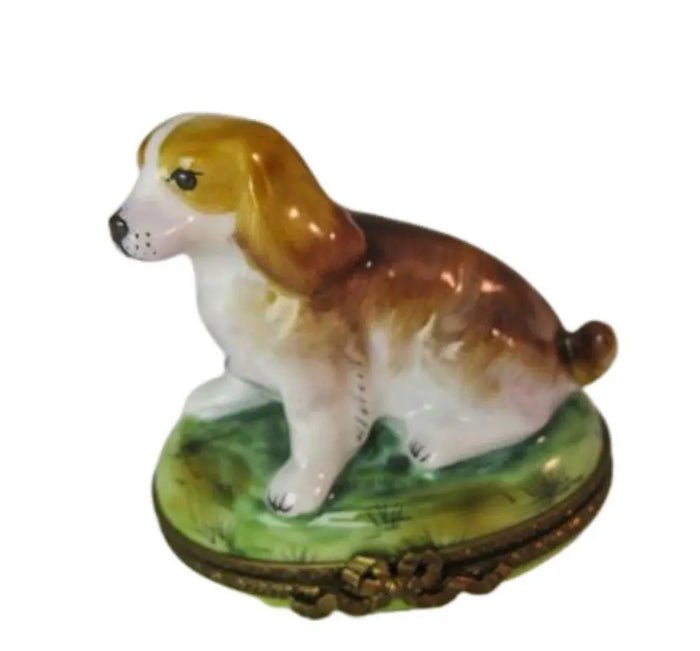
The most common question we hear is “What is my Limoges box worth?” The honest answer is that it’s worth what similar boxes have recently sold for, not what sellers are asking. Here is the simple method we use. It takes about twenty minutes and needs no special tools. For the bigger picture, see What’s My Limoges Box Worth?
Step 1: Identify the box properly
Before you can compare prices, you need to know what you have. Write down:
- Every word and initial on the base, exactly as written (for example, “Limoges France, Peint Main, Rochard”).
- The subject: what the box shows or is shaped like.
- The size, measured in inches or centimeters.
- Anything inside: a painted scene, a removable charm or a signature.
- Whether you have the original box or a certificate, and any edition number.
If you’re unsure what the marks mean, our guide to reading the marks explains each one.
Step 2: Judge the condition honestly
Condition changes value more than almost anything else. Check under good light for chips (especially on rims, ears and tails), hairline cracks, worn gold, rubbing on the painting, a loose mount and a clasp that doesn’t close. Note everything. A box with damage should only be compared with other damaged boxes.
Step 3: Search sold listings, not asking prices
On eBay, search for the maker and subject (for example, “Rochard beagle Limoges”), then turn on the Sold items filter. Auction price databases such as LiveAuctioneers and Invaluable show past results from auction houses. Some require a free account to see the prices.
Try several searches with different wording: “Limoges dog box”, “Limoges beagle trinket”, the maker’s name alone, and so on. Sellers describe the same box in very different ways.
Step 4: Find three to five true matches
Look for boxes that match yours on maker, subject, size and condition. Ignore listings that are clearly different, such as a larger version, a different maker, or a box missing its charm when yours is complete. Write down the sold price and the date for each true match.
Step 5: Read the range, not the highest number
Your box’s likely value is the middle of the range of recent matches, not the single highest sale. One collector may have overpaid once; that doesn’t set the market. If you only find one or two matches, treat the result as a rough guide.
Step 6: Adjust for how you will sell
- Selling it yourself online usually gets the closest to the sold prices you found, minus fees and shipping.
- Consignment shops take a commission, often 30 to 50 percent.
- Dealers need to resell at a profit, so expect an offer well below retail.
- Auction houses charge the seller a commission, and results vary from sale to sale.
When to pay for a professional appraisal
For a single typical box, the method above is enough. For a large collection, insurance, an estate or a charitable donation, a written appraisal from an accredited appraiser is worth the fee. Bring them your notes and photos; it will save time.
Tip: Save screenshots of the sold listings you used, with their dates. If you insure, divide or sell the box later, you’ll have the evidence ready.
Quick answers
Anyone can list a box at any price. Many listings sit unsold for months. Sold prices show what buyers were actually willing to pay, which is the real market value.
Ideally from the last six to twelve months. Collectible prices change over time, so older results are less reliable.
Look for the closest similar boxes, such as the same maker with a similar subject and size, and treat the result as a rough estimate. Rare boxes may need a specialist dealer or appraiser.
This article is general guidance from the team behind LimogesBoutique.com, who have worked with Limoges boxes for more than thirty years. It is not a formal appraisal. For more help, see our Limoges box Q&A.
Leave a Reply