Category: Value & Selling

What Limoges boxes are worth and how to sell them.

  • How to Sell Limoges Boxes: Where to Sell, What to Expect and How to Get a Fair Price

    How to Sell Limoges Boxes: Where to Sell, What to Expect and How to Get a Fair Price

    Selling Limoges boxes isn’t hard, but the place you sell and the way you present each box make a big difference to what you get. Here is a straightforward comparison of your options and the steps that matter most.

    Your main options

    Selling online yourself

    Marketplaces such as eBay reach the largest number of collectors and usually bring the highest prices for good boxes. In exchange, you do the photography, the descriptions, the questions and the shipping, and you pay the platform’s fees.

    Consignment shops

    A local consignment or antiques shop sells the boxes for you and keeps a commission, often 30 to 50 percent. It’s easy, but sales can be slow and prices are limited to local buyers.

    Dealers

    A dealer buys outright, so you’re paid immediately. Because they have to resell at a profit, offers are usually well below retail. This suits people who value speed and simplicity over the last dollar.

    Auction houses

    Regional auction houses often accept Limoges boxes, usually grouped into lots. Exceptional boxes may suit a decorative arts sale. Ask about the seller’s commission and any photography or insurance fees first.

    Before you list: know what you have

    Identify the maker and marks, check the condition carefully and look up recent sold prices for matching boxes. Our step-by-step guide, How to Find What Your Limoges Box Really Sold For, walks you through it.

    Photographs that sell

    • Use daylight near a window, with no flash.
    • Use a plain white or light gray background.
    • Show the top, front, back, both ends, the box open, the clasp, any surprise inside and a sharp close-up of the base marks.
    • Photograph any damage clearly. Honest photos prevent returns and build trust.

    Writing a good description

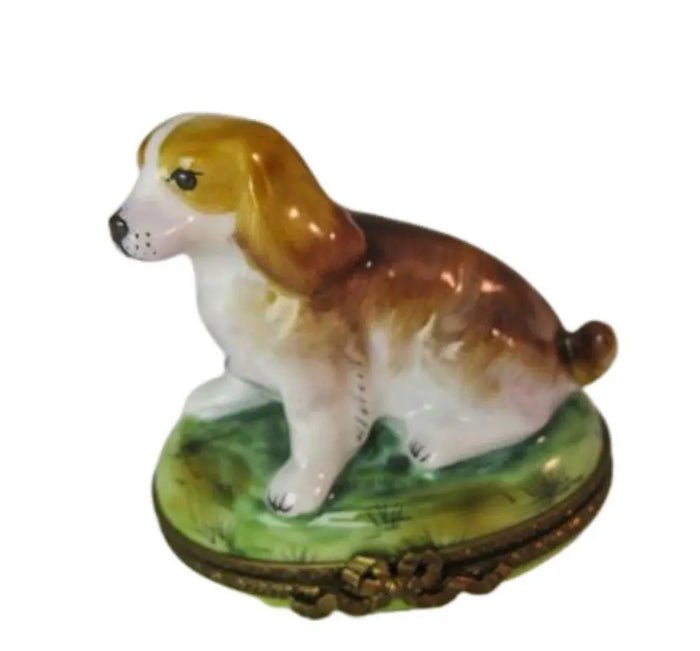
    Put the most useful words in the title: “Limoges France”, the maker, the subject and “Peint Main” if it applies, for example “Rochard Limoges France Peint Main Beagle Dog Box”. In the description, give the size, every mark on the base, the condition (with any flaws listed plainly) and whether the original box or certificate is included.

    Pricing

    Price close to the middle of recent sold prices for true matches. If you want a quicker sale, start slightly lower. If your box is in better condition than most matches, or complete with its certificate, you can ask a little more.

    Selling a large collection

    Selling box by box gets the most money but takes the most time. A practical middle path is to sell the best ten or twenty boxes individually and offer the rest in small themed lots, such as “six Limoges animal boxes”.

    Packing and shipping

    1. Keep the lid closed with a soft band or tissue; don’t put tape on the porcelain.
    2. Wrap the box in tissue, then bubble wrap.
    3. Place it in a small sturdy box with padding on all sides.
    4. Put that box inside a larger carton with more padding (double boxing).
    5. Add tracking, and insure valuable boxes.

    Remember: describing condition honestly is the single best way to avoid returns, disputes and bad feedback.

    Quick answers

    What is the fastest way to sell Limoges boxes?

    Selling the collection to a dealer, or as one lot at auction. Both are quick, but you’ll usually receive less than selling the best boxes individually.

    Do I need the original box to sell a Limoges box?

    No, but it helps. Original packaging and certificates make a box more attractive to collectors and easier to ship safely.

    Should I mention damage in my listing?

    Yes, always. List and photograph every chip, crack, repair, worn area or missing part. Buyers will find it anyway, and honest listings sell more smoothly.

    This article is general guidance from the team behind LimogesBoutique.com, who have worked with Limoges boxes for more than thirty years. It is not a formal appraisal. For more help, see our Limoges box Q&A.
  • How to Find What Your Limoges Box Really Sold For: A Step-by-Step Price Check

    How to Find What Your Limoges Box Really Sold For: A Step-by-Step Price Check

    The most common question we hear is “What is my Limoges box worth?” The honest answer is that it’s worth what similar boxes have recently sold for, not what sellers are asking. Here is the simple method we use. It takes about twenty minutes and needs no special tools. For the bigger picture, see What’s My Limoges Box Worth?

    Step 1: Identify the box properly

    Before you can compare prices, you need to know what you have. Write down:

    • Every word and initial on the base, exactly as written (for example, “Limoges France, Peint Main, Rochard”).
    • The subject: what the box shows or is shaped like.
    • The size, measured in inches or centimeters.
    • Anything inside: a painted scene, a removable charm or a signature.
    • Whether you have the original box or a certificate, and any edition number.

    If you’re unsure what the marks mean, our guide to reading the marks explains each one.

    Step 2: Judge the condition honestly

    Condition changes value more than almost anything else. Check under good light for chips (especially on rims, ears and tails), hairline cracks, worn gold, rubbing on the painting, a loose mount and a clasp that doesn’t close. Note everything. A box with damage should only be compared with other damaged boxes.

    Step 3: Search sold listings, not asking prices

    On eBay, search for the maker and subject (for example, “Rochard beagle Limoges”), then turn on the Sold items filter. Auction price databases such as LiveAuctioneers and Invaluable show past results from auction houses. Some require a free account to see the prices.

    Try several searches with different wording: “Limoges dog box”, “Limoges beagle trinket”, the maker’s name alone, and so on. Sellers describe the same box in very different ways.

    Step 4: Find three to five true matches

    Look for boxes that match yours on maker, subject, size and condition. Ignore listings that are clearly different, such as a larger version, a different maker, or a box missing its charm when yours is complete. Write down the sold price and the date for each true match.

    Step 5: Read the range, not the highest number

    Your box’s likely value is the middle of the range of recent matches, not the single highest sale. One collector may have overpaid once; that doesn’t set the market. If you only find one or two matches, treat the result as a rough guide.

    Step 6: Adjust for how you will sell

    • Selling it yourself online usually gets the closest to the sold prices you found, minus fees and shipping.
    • Consignment shops take a commission, often 30 to 50 percent.
    • Dealers need to resell at a profit, so expect an offer well below retail.
    • Auction houses charge the seller a commission, and results vary from sale to sale.

    When to pay for a professional appraisal

    For a single typical box, the method above is enough. For a large collection, insurance, an estate or a charitable donation, a written appraisal from an accredited appraiser is worth the fee. Bring them your notes and photos; it will save time.

    Tip: Save screenshots of the sold listings you used, with their dates. If you insure, divide or sell the box later, you’ll have the evidence ready.

    Quick answers

    Why are asking prices so much higher than sold prices?

    Anyone can list a box at any price. Many listings sit unsold for months. Sold prices show what buyers were actually willing to pay, which is the real market value.

    How recent should sold prices be?

    Ideally from the last six to twelve months. Collectible prices change over time, so older results are less reliable.

    What if I can’t find any matches at all?

    Look for the closest similar boxes, such as the same maker with a similar subject and size, and treat the result as a rough estimate. Rare boxes may need a specialist dealer or appraiser.

    This article is general guidance from the team behind LimogesBoutique.com, who have worked with Limoges boxes for more than thirty years. It is not a formal appraisal. For more help, see our Limoges box Q&A.