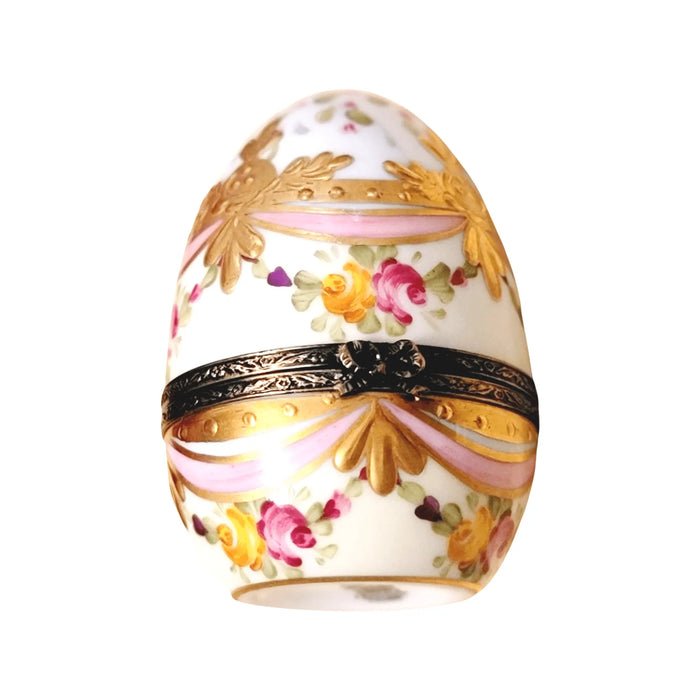
Two identical Limoges boxes can sell for very different prices, and condition is usually the reason. Here is how to inspect a box like a dealer would, and what each kind of wear or damage means for value.
How to inspect a box
- Work in good daylight or under a bright lamp, over a soft towel.
- Lift the box by its base, never by the lid.
- Look slowly at every rim, edge and projection: ears, tails, beaks, handles and feet.
- Use a 10x loupe on anything that catches your eye.
- Open and close the lid several times, checking the hinge and clasp.
- Look inside and on the base, too.
Types of damage, from least to most serious
Light wear to gilding
Fired gold wears on raised edges with handling. Light wear is normal on older boxes and has a modest effect on value. Heavy wear, where the gold is mostly gone, is more noticeable.
Rubbing to the painting
Small scuffs or dull patches, often on the highest points of the design, come from handling or cleaning. Minor rubbing reduces value a little; rubbing on a face or a focal point reduces it more.
A loose mount or stiff hinge
The metal mount is glued to the porcelain, and glue can fail over time. A loose mount is common and usually repairable, but buyers will expect a lower price unless it has been fixed properly.
A missing clasp or surprise
A missing clasp can be replaced, but a missing removable charm or surprise usually lowers value, because collectors want boxes complete.
Chips
Chips to the porcelain are serious. Even a small chip on a rim can cut the value of a typical box significantly, often by half or more, depending on size and position. Chips on ears, tails and other projections are common.
Hairline cracks
Fine cracks can be hard to see. Look for thin dark lines, especially near rims and the base. A crack through the porcelain is usually more serious than a chip, because it can spread.
Repairs and restoration
Professional restoration can make damage almost invisible, but a restored box is still worth less than an undamaged one and should always be described as restored.
How to spot a hidden repair
- Look for areas where the glaze is slightly duller, softer or a different shade.
- Feel gently for a surface that is warmer or slightly tacky compared with the porcelain around it.
- Use a UV flashlight in a dark room: many repair materials glow differently from fired porcelain.
- Check projections first: ears, tails and handles are where repairs most often hide.
Should you repair a damaged box?
For a box you plan to sell, usually not. Restoration often costs more than it adds. For a sentimental box you’re keeping, a careful professional repair can be well worth it. Avoid superglue on anything valuable, because it is hard to undo.
Selling a damaged box? Describe and photograph every flaw. Honest listings sell more smoothly than “mint” boxes that arrive with surprises. See How to Sell Limoges Boxes.
Quick answers
Yes. Collectors pay a premium for undamaged boxes, so even a small chip can significantly lower the price, especially on a rim or a focal point.
Usually not. The mount is glued on, and a restorer or experienced dealer can usually re-set it. It still lowers the price until it’s fixed.
Look for duller or softer areas of glaze, slight color differences and, if you can, check under a UV flashlight. Repairs often hide on ears, tails and rims.
This article is general guidance from the team behind LimogesBoutique.com, who have worked with Limoges boxes for more than thirty years. It is not a formal appraisal. For more help, see our Limoges box Q&A.
Leave a Reply