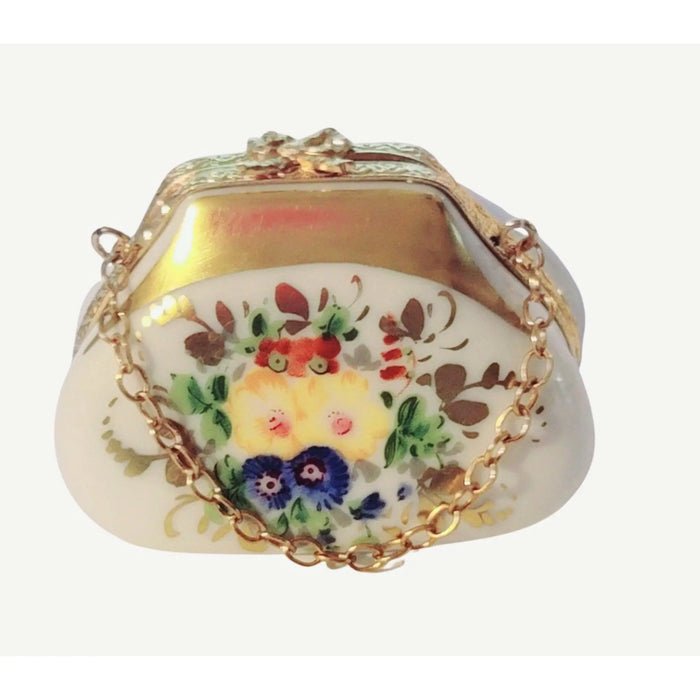
Not every small hinged box with flowers on the lid is a Limoges box, and not everything marked “Limoges” is French porcelain. Here are the things most often confused with Limoges boxes, and how to tell them apart in a minute or two.
French Limoges porcelain boxes
The real thing: hard-paste porcelain made in the Limoges area of France, usually with a fitted brass mount and clasp, and marked “Limoges France” on the base, often with “Peint Main” and a maker’s name. Porcelain feels cool and dense, and thin areas let light through. See How to Tell If a Limoges Box Is Real.
Enamel boxes
Enamel boxes are made by fusing colored glass (enamel) onto a metal body, usually copper. English makers such as Halcyon Days are well known for them. They’re collectible in their own right, but they’re not porcelain.
How to tell: enamel boxes are usually lighter and thinner-walled, feel slightly warmer, and often show metal at the edges or inside. If a small chip shows dark metal underneath, it’s enamel, not porcelain.
Limoges enamels
Limoges has a second, much older craft: enamel on copper, made there since the Middle Ages. Medieval and Renaissance Limoges enamels are museum pieces. Modern enamel pieces are also made in the region. They share the city’s name but are a different art from porcelain boxes.
“Limoges China” from Ohio
The Limoges China Company was an American pottery in Sebring, Ohio, that made everyday dinnerware in the first half of the twentieth century. Its marks include the word “Limoges”, which confuses many people. These pieces are American, not French, and they’re dishes, not trinket boxes.
Mass-produced porcelain trinket boxes
Many decorative boxes are made in Asia and sold as gifts. They may be marked “Limoges style” or carry a removable “Limoges” sticker, but no French marks.
How to tell: printed decoration with a dot pattern under magnification, lighter mounts or plastic hinges, magnetic closures, glue residue from removed country-of-origin labels and very low prices.
Real Limoges porcelain painted elsewhere
Undecorated French porcelain blanks were exported for many years, and china painters around the world decorated them. These are genuine Limoges porcelain with non-French painting, usually marked with the factory’s blank mark only, sometimes with a painter’s signature and a date.
Quick comparison
- Feels cool, dense, slightly translucent; marked “Limoges France”: likely French Limoges porcelain.
- Thin, light, metal visible at edges: likely an enamel box.
- Dinner plates or bowls marked “Limoges China”: likely the American company from Ohio.
- “Limoges” sticker, printed design, magnetic clasp: likely a mass-produced look-alike.
Still unsure? Our 40 collector questions and answers cover the most common puzzles, and our team is happy to look at clear photos sent through the LimogesBoutique.com contact page.
Quick answers
Not necessarily. They’re different collectibles with their own markets. Fine enamel boxes can be valuable; they just aren’t Limoges porcelain.
Pieces from the American Limoges China Company are usually collected as vintage dinnerware and sell for modest prices. They aren’t related to French Limoges porcelain.
Porcelain feels cool, dense and heavier for its size, and thin areas let light through. Enamel boxes are usually lighter, with metal visible at the edges or inside.
This article is general guidance from the team behind LimogesBoutique.com, who have worked with Limoges boxes for more than thirty years. It is not a formal appraisal. For more help, see our Limoges box Q&A.
Leave a Reply