Category: Identification

Is it real? Who made it? How old is it? Plain-English help identifying Limoges boxes.

  • Limoges Boxes vs. Look-Alikes: Enamel Boxes, “Limoges China” and Other Trinket Boxes

    Limoges Boxes vs. Look-Alikes: Enamel Boxes, “Limoges China” and Other Trinket Boxes

    Not every small hinged box with flowers on the lid is a Limoges box, and not everything marked “Limoges” is French porcelain. Here are the things most often confused with Limoges boxes, and how to tell them apart in a minute or two.

    French Limoges porcelain boxes

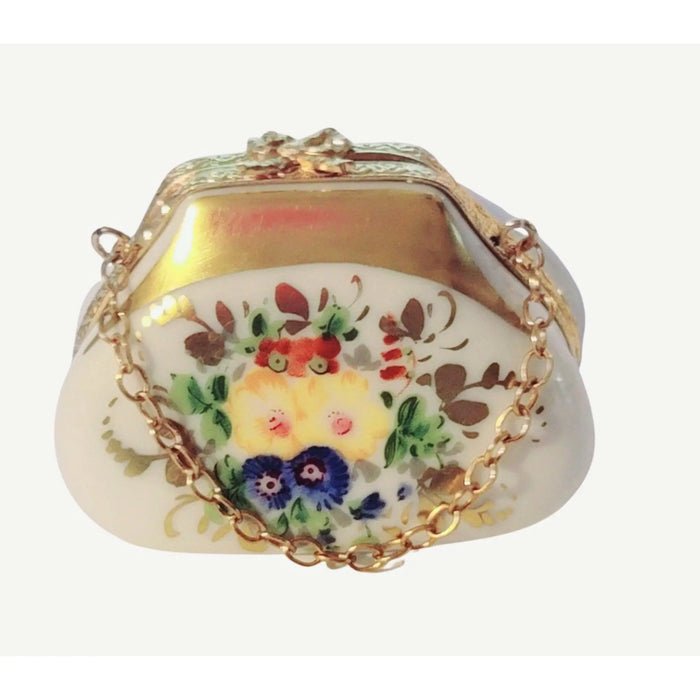
    The real thing: hard-paste porcelain made in the Limoges area of France, usually with a fitted brass mount and clasp, and marked “Limoges France” on the base, often with “Peint Main” and a maker’s name. Porcelain feels cool and dense, and thin areas let light through. See How to Tell If a Limoges Box Is Real.

    Enamel boxes

    Enamel boxes are made by fusing colored glass (enamel) onto a metal body, usually copper. English makers such as Halcyon Days are well known for them. They’re collectible in their own right, but they’re not porcelain.

    How to tell: enamel boxes are usually lighter and thinner-walled, feel slightly warmer, and often show metal at the edges or inside. If a small chip shows dark metal underneath, it’s enamel, not porcelain.

    Limoges enamels

    Limoges has a second, much older craft: enamel on copper, made there since the Middle Ages. Medieval and Renaissance Limoges enamels are museum pieces. Modern enamel pieces are also made in the region. They share the city’s name but are a different art from porcelain boxes.

    “Limoges China” from Ohio

    The Limoges China Company was an American pottery in Sebring, Ohio, that made everyday dinnerware in the first half of the twentieth century. Its marks include the word “Limoges”, which confuses many people. These pieces are American, not French, and they’re dishes, not trinket boxes.

    Mass-produced porcelain trinket boxes

    Many decorative boxes are made in Asia and sold as gifts. They may be marked “Limoges style” or carry a removable “Limoges” sticker, but no French marks.

    How to tell: printed decoration with a dot pattern under magnification, lighter mounts or plastic hinges, magnetic closures, glue residue from removed country-of-origin labels and very low prices.

    Real Limoges porcelain painted elsewhere

    Undecorated French porcelain blanks were exported for many years, and china painters around the world decorated them. These are genuine Limoges porcelain with non-French painting, usually marked with the factory’s blank mark only, sometimes with a painter’s signature and a date.

    Quick comparison

    • Feels cool, dense, slightly translucent; marked “Limoges France”: likely French Limoges porcelain.
    • Thin, light, metal visible at edges: likely an enamel box.
    • Dinner plates or bowls marked “Limoges China”: likely the American company from Ohio.
    • “Limoges” sticker, printed design, magnetic clasp: likely a mass-produced look-alike.

    Still unsure? Our 40 collector questions and answers cover the most common puzzles, and our team is happy to look at clear photos sent through the LimogesBoutique.com contact page.

    Quick answers

    Is an enamel box worth less than a Limoges box?

    Not necessarily. They’re different collectibles with their own markets. Fine enamel boxes can be valuable; they just aren’t Limoges porcelain.

    Is “Limoges China” valuable?

    Pieces from the American Limoges China Company are usually collected as vintage dinnerware and sell for modest prices. They aren’t related to French Limoges porcelain.

    How can I tell porcelain from enamel quickly?

    Porcelain feels cool, dense and heavier for its size, and thin areas let light through. Enamel boxes are usually lighter, with metal visible at the edges or inside.

    This article is general guidance from the team behind LimogesBoutique.com, who have worked with Limoges boxes for more than thirty years. It is not a formal appraisal. For more help, see our Limoges box Q&A.
  • How Old Is My Limoges Box? Clues for Dating a Box

    How Old Is My Limoges Box? Clues for Dating a Box

    Exact dates are rare on Limoges boxes, but you can usually narrow down when a box was made. Put several clues together and you’ll have a sensible estimate. Here is what to look for.

    Start with realistic expectations

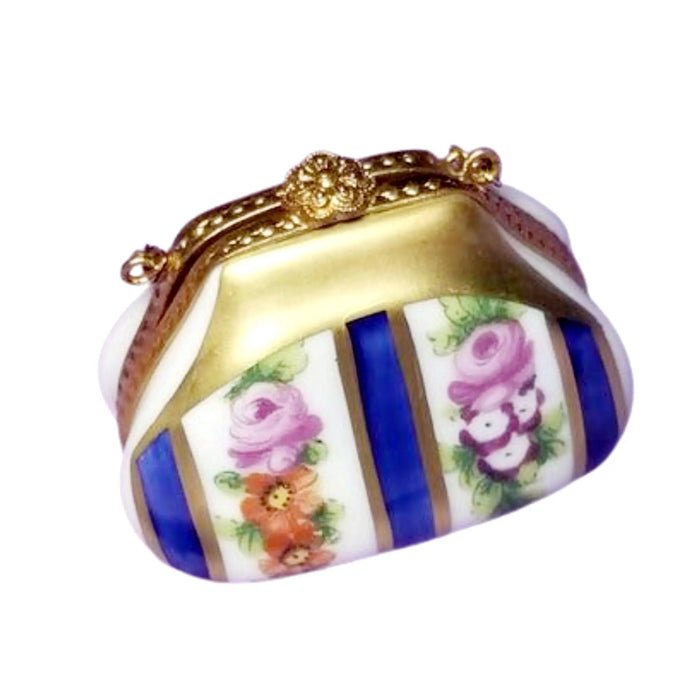
    Most hinged porcelain trinket boxes you’ll find today were made from about the 1970s onward, when the modern Limoges box became popular with collectors, especially in the United States. Older porcelain boxes do exist, but they’re much less common and usually look quite different. If you think yours is genuinely antique, ask an auction house or appraiser to examine it.

    Clue 1: A date on the box

    Holiday and commemorative boxes often have the year painted on the lid, the base or the inside. Limoges Christmas boxes are a good example; see Christmas and Holiday Limoges Boxes. A painted date is the most direct clue you’ll get.

    Clue 2: Certificates and edition numbers

    A limited edition certificate may give the year of issue or name the series. An edition number on the base (for example, 45/500) can be matched to catalogs and sold listings for the same edition.

    Clue 3: The wording of the marks

    Makers changed their marks over the years. A brand’s logo, wording or color may have changed several times, so comparing your mark with dated examples from the same maker in sold listings can narrow the period. A box carrying the IGP Porcelaine de Limoges mark must have been made after that protection was granted in 2017.

    Clue 4: Retailer and importer names

    Many boxes were sold under the names of stores, catalog companies and importers that were active in particular years. If you can find when that retailer sold Limoges boxes, you have a rough date range.

    Clue 5: The subject and style

    Subjects follow fashion. Some themes, characters and commemorative events belong clearly to a particular decade. A box celebrating a specific anniversary, event or year obviously dates from around that time.

    Clue 6: The metal mount and clasp

    Hinges and clasps changed in shape and finish over time and from maker to maker. On their own they’re hard to read, but a dealer who handles many boxes can sometimes recognize a period or workshop from the clasp alone.

    Clue 7: Wear that matches the age

    Genuine age usually shows as soft, even wear on raised gilding and high points, consistent with handling over years. Wear that looks scratched, patchy or deliberately “aged” deserves a closer look.

    Putting it together

    No single clue settles the question. Write down everything you find, compare your box with dated examples in sold listings, and give an estimate such as “probably 1990s” rather than an exact year. For help reading the marks, see Reading the Marks on a Limoges Box.

    Quick answers

    Are older Limoges boxes worth more?

    Not automatically. Condition, maker, subject and quality usually matter more than age. A recent, sought-after box in perfect condition can outsell an older, ordinary one.

    Is my Limoges box an antique?

    An antique is usually defined as 100 years old or more. Most hinged Limoges trinket boxes are much younger, dating from the later twentieth century onward.

    Can the IGP mark help date a box?

    Yes, roughly. A box with the IGP Porcelaine de Limoges mark was made after the IGP was granted in 2017. A box without it can still be any age.

    This article is general guidance from the team behind LimogesBoutique.com, who have worked with Limoges boxes for more than thirty years. It is not a formal appraisal. For more help, see our Limoges box Q&A.
  • Peint Main, Rehaussé Main, Décor Main: What the Painting Words on a Limoges Box Really Mean

    Peint Main, Rehaussé Main, Décor Main: What the Painting Words on a Limoges Box Really Mean

    Turn over almost any genuine Limoges box and you’ll find a short French phrase describing how it was decorated. These few words matter, because they tell you how much of the design was done by an artist’s hand. Here is what each one means, and how to check it with your own eyes.

    Peint Main: painted by hand

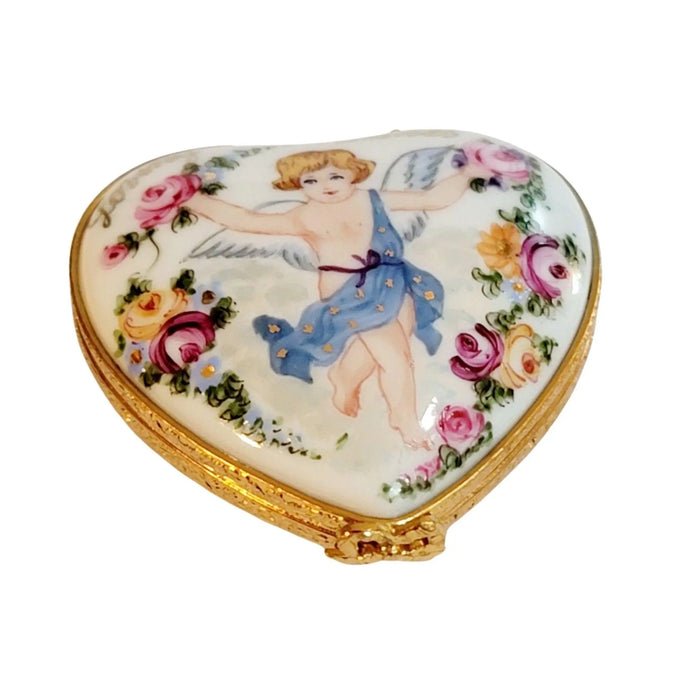
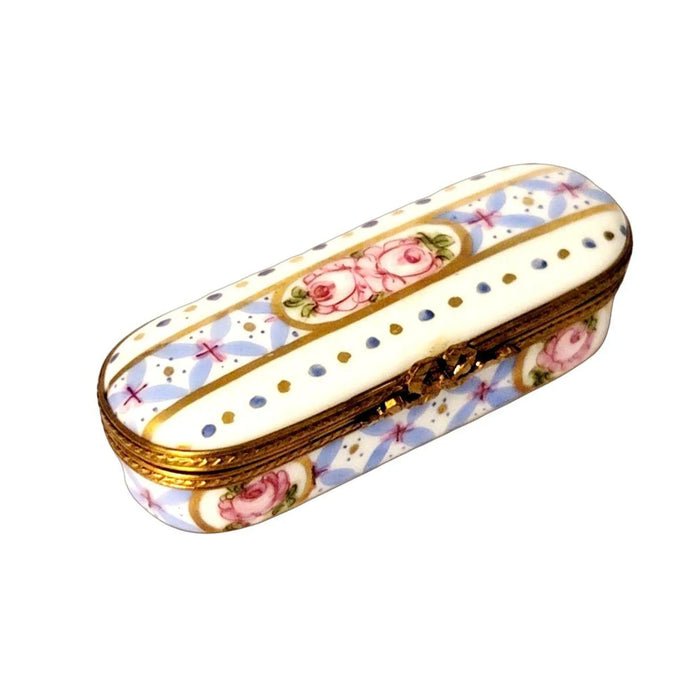
    “Peint main” means painted by hand. On a box with this mark, an artist has painted the design with a brush rather than applying a printed transfer. It’s the mark most collectors look for. Each box is slightly different, because each is painted individually.

    How to check: under a 10x loupe you should see brushstrokes, slight variations in thickness and colors blending softly. You shouldn’t see a regular pattern of printed dots in the main design.

    Rehaussé Main: enhanced by hand

    “Rehaussé main” means enhanced or highlighted by hand. Usually the main design is a decal (a printed transfer), and an artist has added hand-painted touches, such as gold lines, highlights, small details or color accents.

    How to check: under the loupe you’ll often see a printed dot pattern in the main picture, with brushwork on top in places, often the gold and the edges.

    These boxes are genuine Limoges porcelain and can be very pretty. They generally sell for less than comparable fully hand-painted boxes.

    Décor Main: decorated by hand

    “Décor main” means decorated by hand. Makers use it in slightly different ways, so read it together with the rest of the marks and look closely at the painting itself. It signals handwork in the decoration, but the words alone don’t tell you exactly how much.

    Fait Main: made by hand

    “Fait main” means made by hand. It’s a general claim of handwork and may refer to the making or assembly as well as the decoration. As with Décor Main, let your loupe be the judge.

    Other useful words

    • Limoges France: the porcelain was made in the Limoges area of France.
    • PM: a short form of “Peint Main”.
    • Déposé: a design or trademark was registered. It isn’t a maker’s name.
    • Édition limitée: limited edition, often with a number such as 45/500.

    For a full list, see our Limoges box glossary.

    Does “Peint Main” guarantee a box is genuine?

    No single phrase does. Look-alike makers sometimes copy the words. Check the whole base, the painting under magnification, the porcelain and the metal mount together, as explained in How to Tell If a Limoges Box Is Real.

    In short: Peint Main means fully hand painted; Rehaussé Main means a printed design with hand-painted touches. Both can be genuine Limoges. Your loupe tells you which you have.

    Quick answers

    Is Peint Main better than Rehaussé Main?

    For most collectors, yes. Fully hand-painted boxes take more skilled work and usually sell for more, but well-made Rehaussé Main boxes are genuine Limoges and can be lovely.

    Can a box be hand painted without saying Peint Main?

    Yes. Some older or smaller-studio boxes aren’t marked, and marks can wear away. Look at the painting itself under magnification.

    What does “main” mean in French?

    “Main” means hand. It appears in Peint Main (painted by hand), Rehaussé Main (enhanced by hand), Décor Main (decorated by hand) and Fait Main (made by hand).

    This article is general guidance from the team behind LimogesBoutique.com, who have worked with Limoges boxes for more than thirty years. It is not a formal appraisal. For more help, see our Limoges box Q&A.
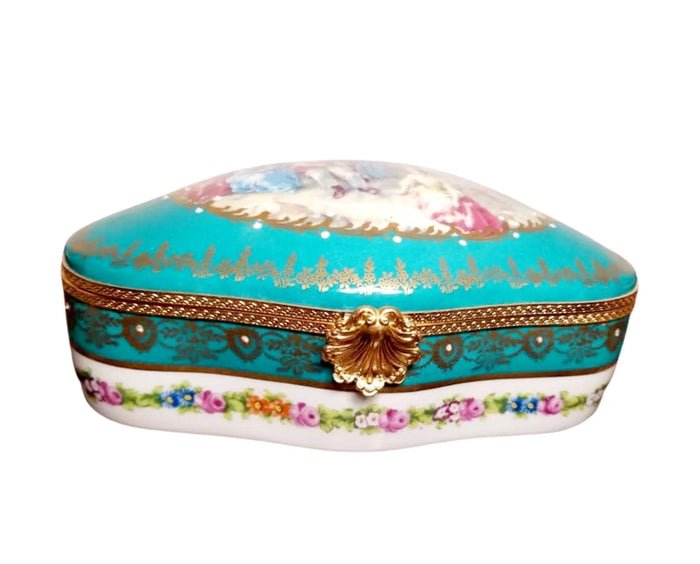
  • Who Made My Limoges Box? How to Identify the Maker from the Base

    Who Made My Limoges Box? How to Identify the Maker from the Base

    Knowing who made your box helps you check that it’s genuine, find matching sold prices and learn its story. Most of the clues are on the base. Here is how to read them, step by step.

    Step 1: Read every mark on the base

    Turn the box over under good light and write down every word, logo, initial and number, exactly as it appears. Use a loupe for small or faint marks. Marks are often in two colors, and some may be partly hidden by a felt pad or old sticker.

    Step 2: Separate the different kinds of mark

    A Limoges box base often carries several different marks, each with its own job:

    • The place: “Limoges France” or “Limoges” with “France”.
    • The decoration: “Peint Main” (hand painted), “Rehaussé Main” (enhanced by hand) or “Décor Main” (decorated by hand).
    • The porcelain factory: often a printed mark under the glaze, sometimes in green.
    • The decorating studio or brand: a name, logo or initials, often over the glaze.
    • The painter: small initials or a signature.
    • The retailer or importer: sometimes a store or company name.

    Our guide to reading the marks shows these in more detail.

    Many boxes carry the name of a well-known Limoges box brand, such as Rochard, Artoria, Chamart, Parry Vieille, La Gloriette or Dubarry. Our page on the makers behind Limoges boxes introduces the main names.

    Step 4: Understand boxes with two names

    Two names on one base are normal. Usually one company made the white porcelain and another decorated it, or a workshop made the box and a retailer added its own name. A store or importer name tells you where the box was sold. The workshop mark tells you who made or painted it.

    Step 5: If there’s no maker’s name

    Plenty of genuine boxes carry only “Limoges France” and “Peint Main”, with no brand. In that case:

    • Compare the painting style, the shape and the metal clasp with identified boxes in sold listings.
    • Search for the exact subject with “Limoges France Peint Main” and browse the results.
    • Ask a specialist dealer, who may recognize the style or the clasp.

    An unbranded box can still be genuine and lovely; it’s just harder to research.

    Step 6: Search smartly

    Search for the exact wording of any unusual mark in quotation marks, along with “Limoges”. Look at sold listings and auction records with the same mark and check their photos. Small studios rarely have websites, but their marks show up again and again on boxes sold over the years.

    Can’t read the mark? Photograph it with a lamp held low to one side. Raking light often brings faint or worn lettering back into view.

    Quick answers

    Is the name on the base always the maker?

    Not always. It may be the decorating studio, the porcelain factory, or the retailer or importer that sold the box. Two or three names on one box are common.

    Does a box without a maker’s name have less value?

    Often a little less, because buyers like a known name, but quality, subject and condition matter more. Many fine boxes carry only “Limoges France” and “Peint Main”.

    What do initials near the edge of the painting mean?

    They’re usually the painter’s initials. They show the box was decorated by an individual artist, and they’re a nice detail for collectors.

    This article is general guidance from the team behind LimogesBoutique.com, who have worked with Limoges boxes for more than thirty years. It is not a formal appraisal. For more help, see our Limoges box Q&A.

  • Real or Fake? 12 Warning Signs on a “Limoges” Box

    Real or Fake? 12 Warning Signs on a “Limoges” Box

    The word “Limoges” sells, which is why it appears on so many boxes that never went near France. The good news is that look-alikes tend to give themselves away. None of the signs below proves a box is fake on its own, but two or three together should make you cautious. For the full step-by-step method, see How to Tell If a Limoges Box Is Real.

    Warning signs on the base

    1. “Limoges” without “France”

    Genuine French boxes almost always say “Limoges France” or “Limoges” with “France” nearby. “Limoges” on its own, especially in a plain modern font, is a common look-alike mark. Read every word on the base, not just the first one.

    2. A paper sticker instead of a fired mark

    Real marks are fired into or onto the porcelain, so they can’t be peeled off. A gold foil sticker reading “Limoges” tells you almost nothing. Look underneath it, and around it, for marks that are part of the porcelain itself.

    3. Traces of a removed label

    Sticky residue or a clean rectangle on the base can mean a “Made in China” or “Made in Taiwan” label was taken off. That doesn’t mean the box is worthless, but it does mean it isn’t French Limoges.

    4. The words “style”, “type” or “inspired”

    In listings and on tags, “Limoges style” almost always means “not from Limoges”. Sellers of genuine boxes name the maker and the marks instead.

    Warning signs in the painting

    5. A dot pattern under magnification

    Under a 10x loupe, printed decoration shows tiny regular dots or an even screen pattern. Hand painting shows brushstrokes, slight changes in thickness and colors blending into each other. A box marked “Peint Main” (hand painted) should show real brushwork.

    6. Painting that stops at the edges

    On a hand-painted figural box, the decoration usually wraps naturally around curves, ears, tails and folds. Decals often look flat, stretched or wrinkled where they meet a curve, and may stop abruptly at a seam.

    7. Gold that looks like paint, not metal

    Fired gold on Limoges porcelain has a soft, metallic glow. Bright yellow paint, glitter or gold that flakes like nail polish is a sign of a cheaper decoration process.

    Warning signs in the metalwork

    8. A sloppy or plastic hinge

    Genuine boxes have a fitted metal mount, usually brass, with a neat hinge. Plastic hinges, visible gaps, crooked mounts or thick globs of glue suggest a mass-market look-alike, or a poor repair.

    9. A magnetic closure

    Traditional Limoges boxes close with a small metal clasp. Magnetic closures are typical of inexpensive look-alikes. A magnet alone isn’t proof, but it’s a reason to check everything else carefully.

    10. A lid that doesn’t line up

    A well-made box closes cleanly with the lid sitting square on the base. A lid that rocks, overhangs or has to be forced suggests poor workmanship, or a mount that has come loose.

    Warning signs in the listing or the price

    11. No photo of the base

    Any seller of a genuine Limoges box can photograph the marks. If a listing shows only the top, ask for the base. If the seller won’t provide it, walk away.

    12. A price that seems too good to be true

    Hand-painted French boxes take many hours of skilled work. A brand-new “hand-painted Limoges” box for a few dollars is almost certainly neither. Secondhand bargains do happen, but a very low price combined with any of the signs above is a strong warning.

    What to do if you suspect a fake

    Compare the marks with our guide to reading the marks and look up the maker in The Makers Behind Limoges Boxes. If you bought online and the box isn’t as described, contact the seller and the marketplace quickly, because buyer protection usually has a time limit. If you inherited it, enjoy it for what it is: plenty of look-alikes are charming, just not French.

    Quick answers

    Is one warning sign enough to call a box fake?

    Usually not. Many genuine boxes have one oddity, such as worn marks or a replaced clasp. Two or three warning signs together are a much stronger signal.

    What tool helps most when checking a Limoges box?

    A 10x jeweler’s loupe and good daylight. Together they show you the difference between brushstrokes and printed dots, and they make faint marks on the base readable.

    Are look-alike boxes worth anything?

    Usually only a little, unless they’re well made or have sentimental value. They’re priced as decorative trinket boxes rather than as French Limoges porcelain.

    This article is general guidance from the team behind LimogesBoutique.com, who have worked with Limoges boxes for more than thirty years. It is not a formal appraisal. For more help, see our Limoges box Q&A.