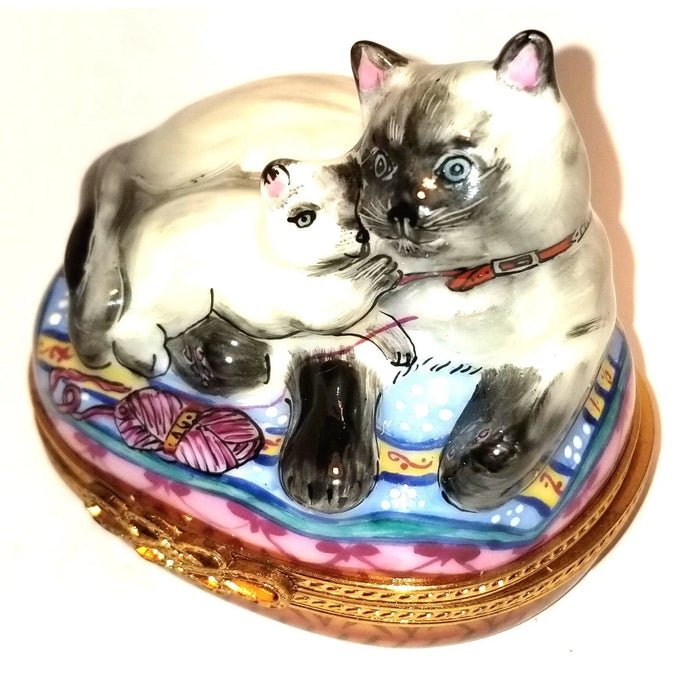
Many people first learn about Limoges boxes when they inherit a cabinet full of them. It can feel overwhelming, especially at an emotional time. There’s no rush. Here is a simple plan that works whether there are five boxes or five hundred.
1. Don’t sell anything in the first week
Dealers and buyers sometimes approach families quickly. Before you agree to anything, take time to find out what you have. Boxes that look alike can be worth very different amounts, and a few days of research can make a real difference.
2. Photograph and list every box
Set up a simple station by a window with a plain background. For each box, photograph the top, the base marks and the inside, and give it a number on a small sticky note placed beside it (never on the porcelain). Then list it in a notebook or spreadsheet:
- Number and short description (for example, “#14, beagle on green base”).
- Every word on the base.
- Condition notes: chips, cracks, worn gold, loose hinge, missing charm.
- Any original box, certificate or receipt.
This record is useful for everything that follows: dividing the collection, insurance, selling or donating.
3. Sort into three groups
- Likely the best: marked “Limoges France” and “Peint Main”, from a known maker, undamaged, and especially large, intricate or limited edition.
- Ordinary but nice: genuine boxes with printed or partly painted decoration, or minor wear.
- Look-alikes or damaged: no French marks, obvious decals on a box claiming hand painting, or significant damage.
Not sure which group a box belongs in? Our authenticity guide and marks guide will help.
4. Research the best pieces first
Check recent sold prices for the boxes in your first group, using the method in How to Find What Your Limoges Box Really Sold For. This tells you quickly whether the collection is mainly sentimental or includes boxes that are worth selling individually.
5. Talk as a family before anyone chooses
Agree on a method first. Some families take turns choosing; others let each person pick a theme. Remember that a box may matter more for the memory attached to it, such as a gift from a trip or a birthday, than for its price. Your list and photos make these conversations easier.
6. Decide what to do with the rest
- Keep and display a favorite few, grouped by theme. Our care and display guide shows how.
- Sell the best pieces individually and the rest in small themed lots.
- Consign to a local shop or auction house if you prefer not to sell yourself.
- Donate to a charity shop or fundraising auction.
7. When to call a professional
If the estate needs a formal valuation for legal or tax purposes, or the collection is large and includes fine pieces, ask an accredited appraiser. For an informal opinion on a few boxes, our team is happy to look at clear photos sent through the LimogesBoutique.com contact page.
Handle with care while you sort: lift each box by its base, never by the lid, and open lids gently. Hinges on boxes that haven’t been opened for years can be stiff.
Quick answers
Only a gentle dusting with a soft dry brush. Don’t wash them or polish the metal; wet cleaning can loosen the glued mounts, and polishing can remove gilding.
Most are worth modest amounts individually, and a few may be worth more. Their real value is often in the memories. Research the best pieces before deciding.
Keep them together with the matching Limoges box. They help with identification, resale and insurance, and they protect the piece in storage.
This article is general guidance from the team behind LimogesBoutique.com, who have worked with Limoges boxes for more than thirty years. It is not a formal appraisal. For more help, see our Limoges box Q&A.
Leave a Reply