The Limoges Box Guide
Limoges Porcelain Boxes, Explained
Everything you need to understand, buy, give, identify and look after a hand-painted French Limoges box, in plain English and free to read.
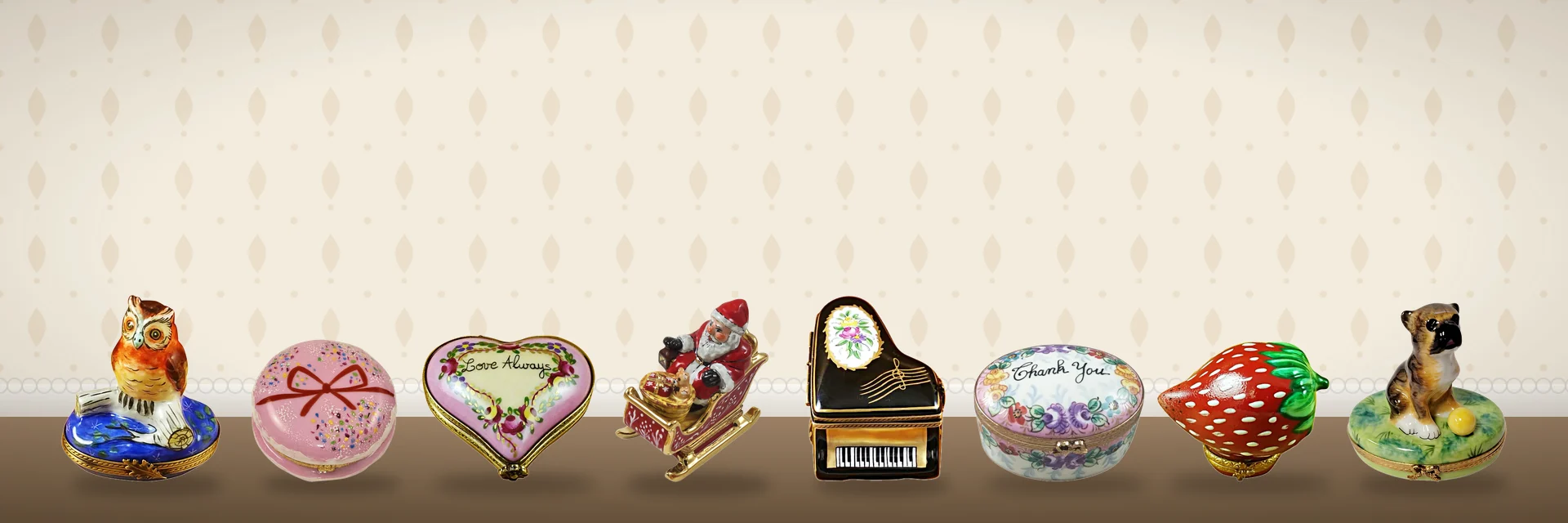
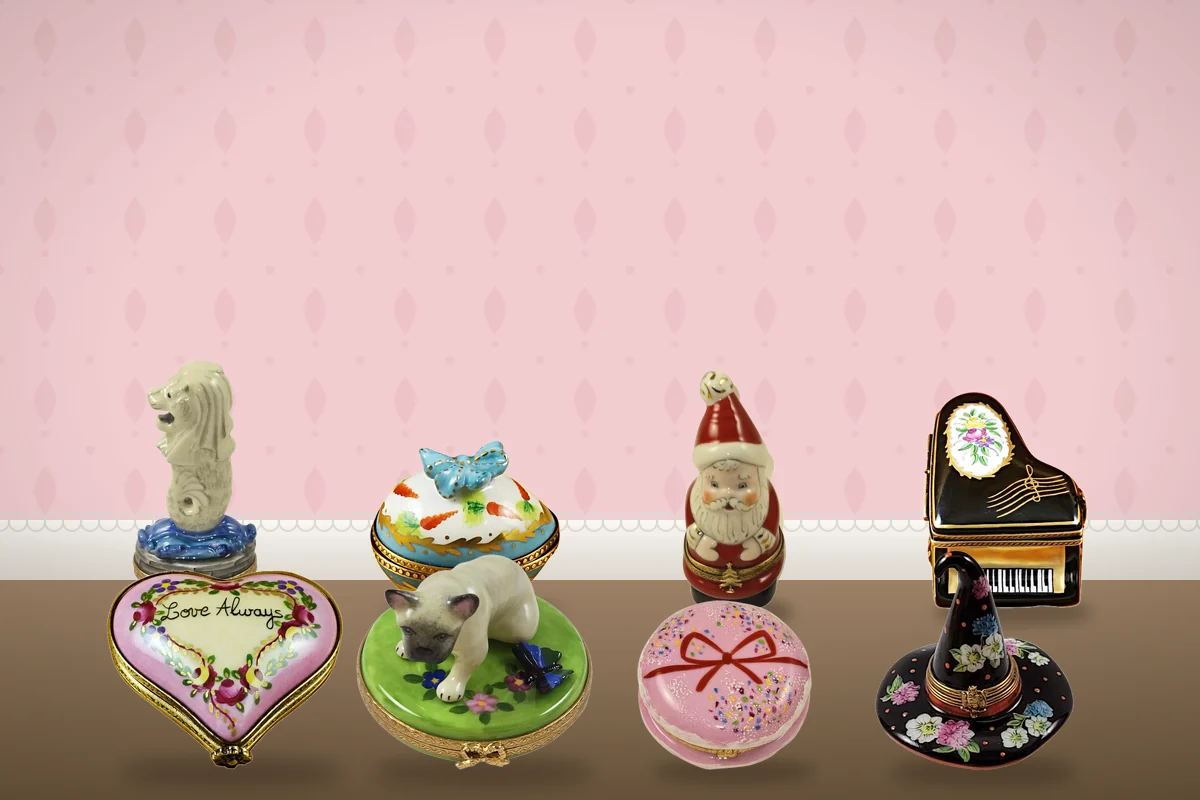
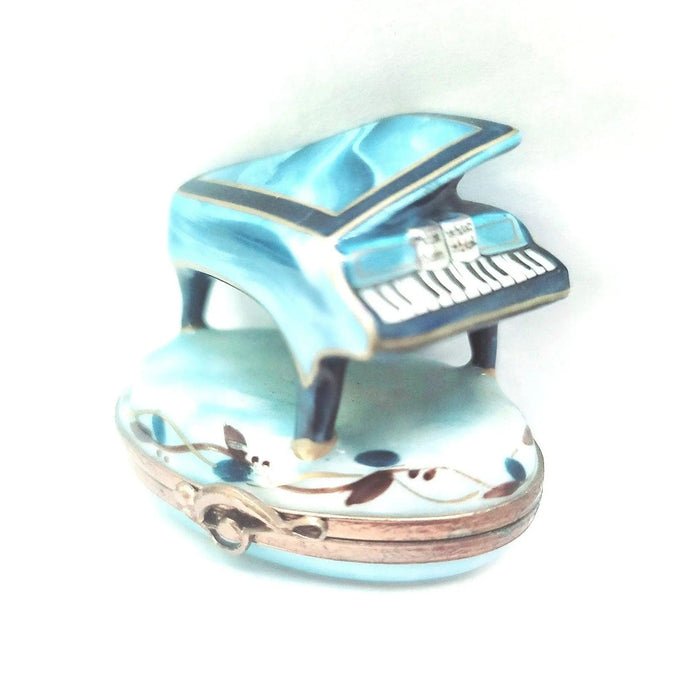
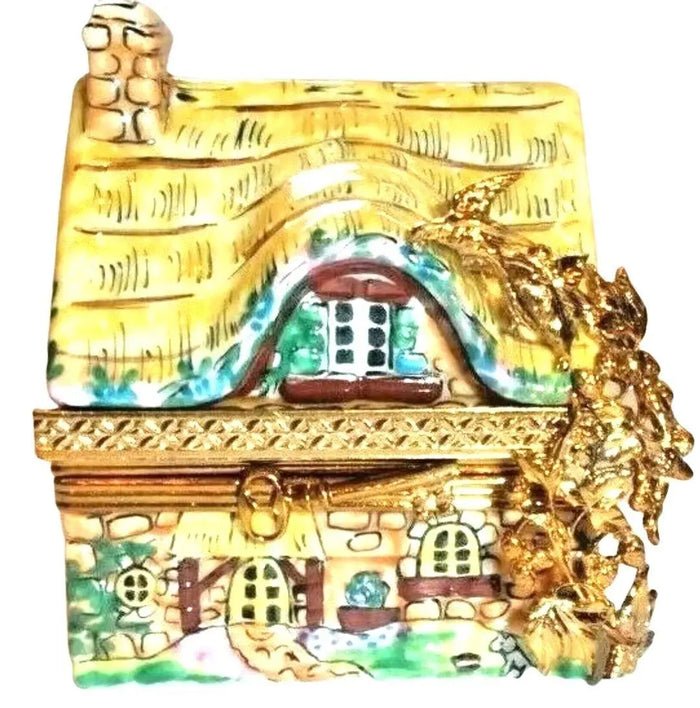
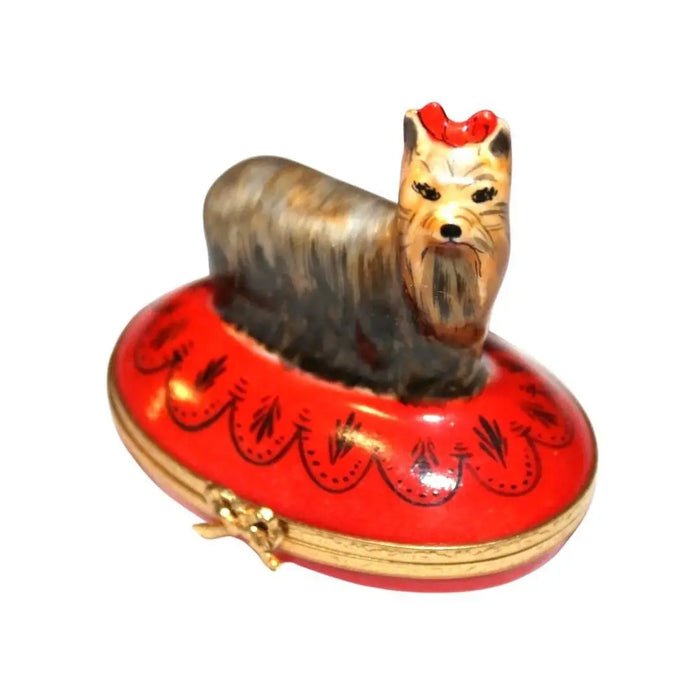
A Limoges box is a small hinged container made of hard-paste porcelain, shaped and painted by hand in and around the city of Limoges in central France, then fitted with a little metal hinge and clasp. Most are small enough to sit in the palm of your hand. Some are simple ovals painted with roses; others are tiny teapots, Labradors, pianos, wedding cakes or Paris café tables, and many hide a miniature porcelain “surprise” inside the lid.
On this page
This site is an independent guide to those boxes. It isn’t a shop. We wrote it for people who want straight answers: the gift-giver choosing a first box, the collector filling a curio cabinet, and the person holding an inherited box and wondering what it is. Start anywhere below, or read straight through.
What makes a box a “Limoges box”
Three things define a true French Limoges box, and they are worth knowing before you read anything else.
- The porcelain. It is hard-paste porcelain, a mix of roughly half kaolin (a pure white clay) with quartz and feldspar. Fired at about 1,400°C (around 2,550°F), it becomes white, hard, nonporous and slightly translucent when thin.
- The place. “Porcelaine de Limoges” is a protected geographical indication. In France, the national IP office (INPI) approved it in late 2017, and in May 2026 it was registered at the European level as well. To qualify, the porcelain must be made and decorated in the Haute-Vienne department, the area around Limoges.
- The handwork. A box is cast in a mold, fired more than once, painted by hand in layers (with a kiln firing between many of those layers), and then fitted by hand with a metal mount, hinge and clasp. Fine pieces often carry the painter’s initials on the base.
Put simply, “Limoges” is a place and a standard, not a brand. Dozens of workshops have worked under that name, which is why reading the marks matters so much.
The parts of a box
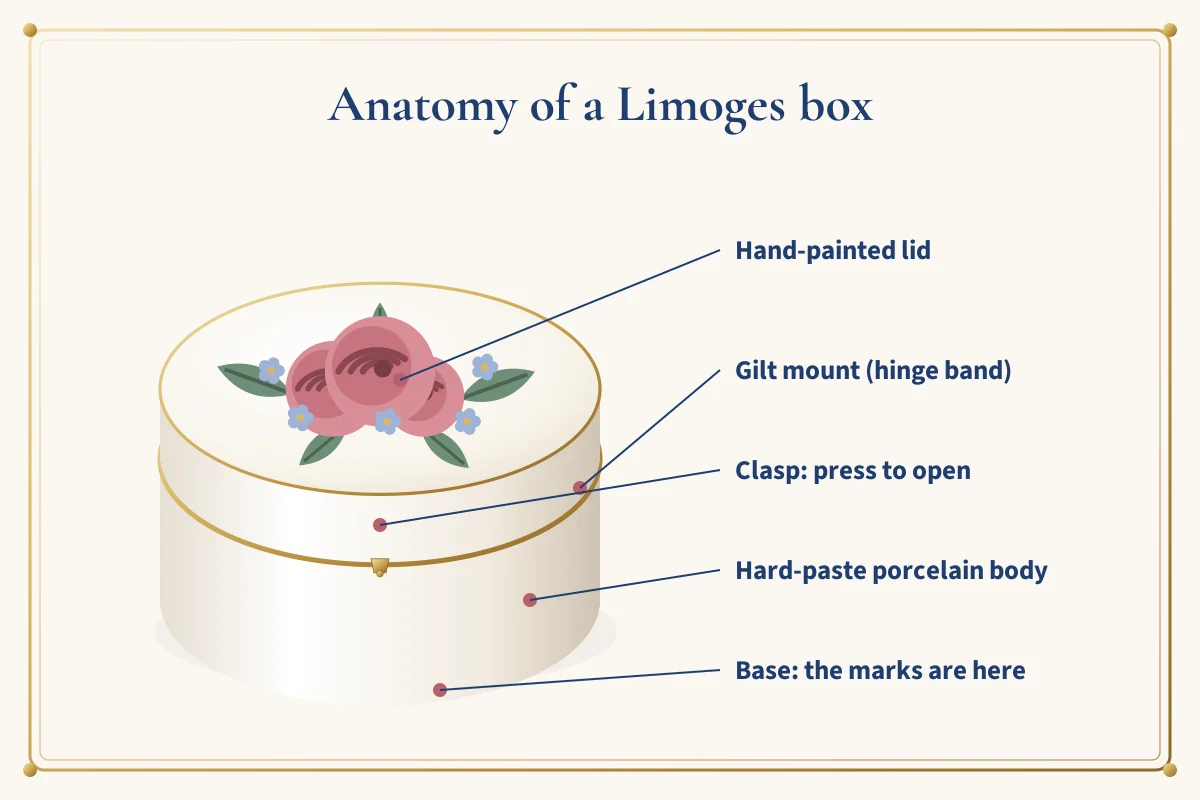
When you read the rest of this guide, these terms will come up again and again:
- Base: the lower half, where the maker’s marks are usually painted or stamped underneath.
- Lid: the upper half. Its inside is often painted too, sometimes with a message, a date or a second scene.
- Mount (or bezel): the thin metal rim glued around the edge of the base and lid, usually brass, often gilded.
- Hinge: the small metal joint at the back that lets the lid open.
- Clasp: the latch at the front. On many figural boxes it is a tiny sculpted shape, like a bee, a bow or a heart, that matches the theme.
- Surprise: a small loose or attached porcelain charm inside, such as a teacup in a teapot box or a bone in a dog box.
A tour of this guide
Each section of the site answers a different question. Here is what you will find, and where.
Is it real?
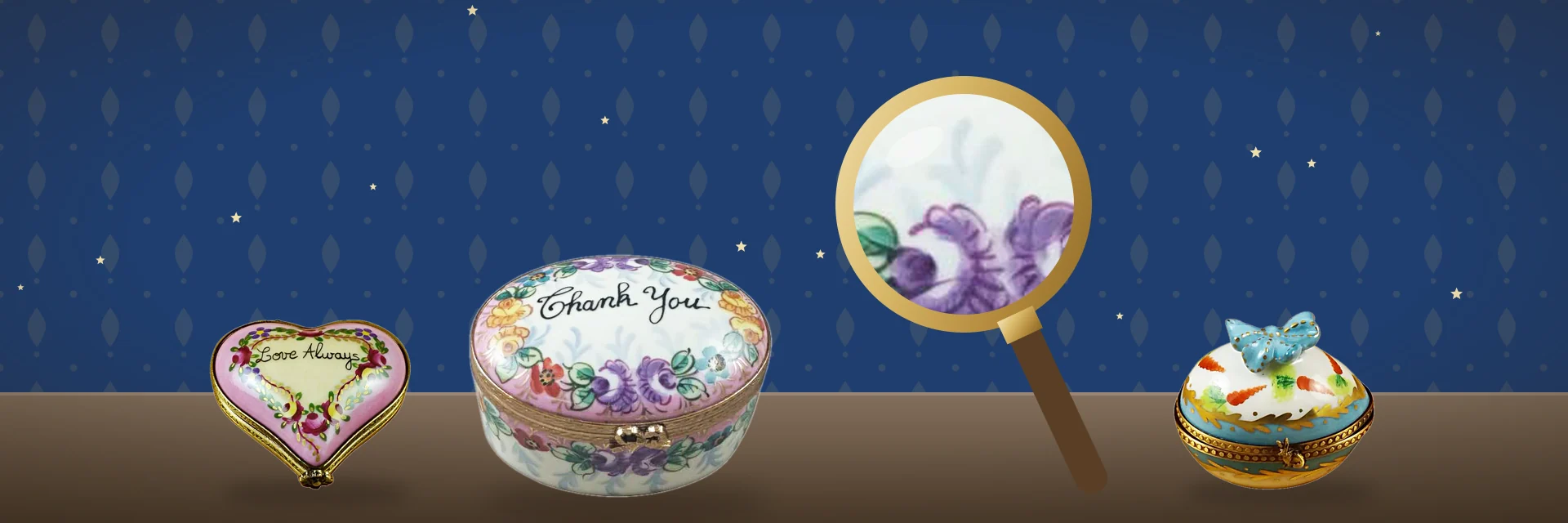
Imitations are common, especially online, and some look convincing in a photo. Our page on how to tell if a Limoges box is real walks you through a hands-on check: the base marks, the brushwork under a magnifier, the hinge and clasp, the weight and translucency of the porcelain, and the price. It ends with a checklist you can use at an estate sale or before you click “buy.”
Reading the marks
The underside of a box is a little document. Reading the Marks decodes it line by line: “Limoges France,” “Peint Main” (painted by hand), workshop and importer names, painter’s initials, numbered limited editions, marks inside the lid, and the older factory stamps you may find on antique pieces. There is a table of common wordings and what each one means.
The makers
Most modern boxes come from small family workshops (called ateliers) and from design houses that commission, import and sell them. The Makers explains who does what, how a design house differs from a porcelain factory, and what the big Limoges names known mainly for dinnerware have and have not made.
History
Porcelain boxes started life in 18th-century France as snuffboxes, patch boxes and other small luxuries. Our history page follows the story from the discovery of kaolin near Saint-Yrieix-la-Perche in the late 1760s, through the first hard-paste porcelain made in Limoges in 1771, to the collectible boxes of today.
How they’re made
A single box passes through many pairs of hands. How They’re Made goes step by step: mold making, casting, the first low firing, glazing and the high firing at about 1,400°C, the hand painting and repeated decorating firings, and finally the fitting of the metal mount.
Shapes and styles
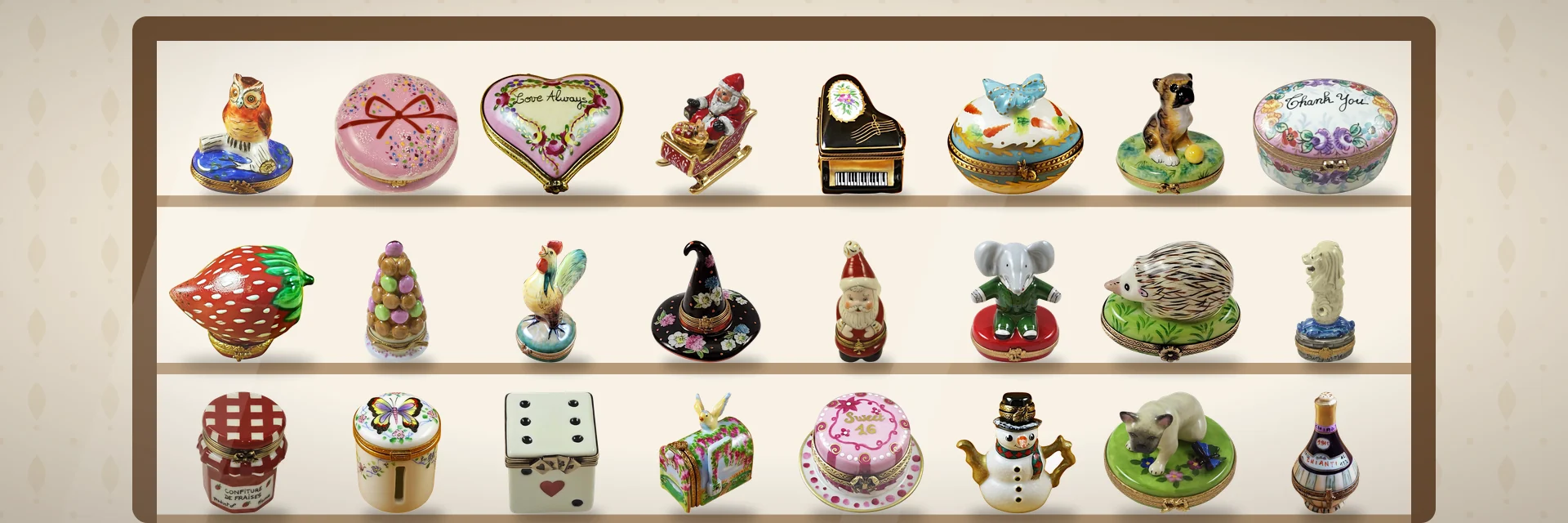
From classic hearts and eggs to animals, landmarks, food, shoes and musical instruments, Shapes & Styles sorts the main families of boxes and explains features like the hidden surprise, painted interiors and personalized messages.
Holiday boxes
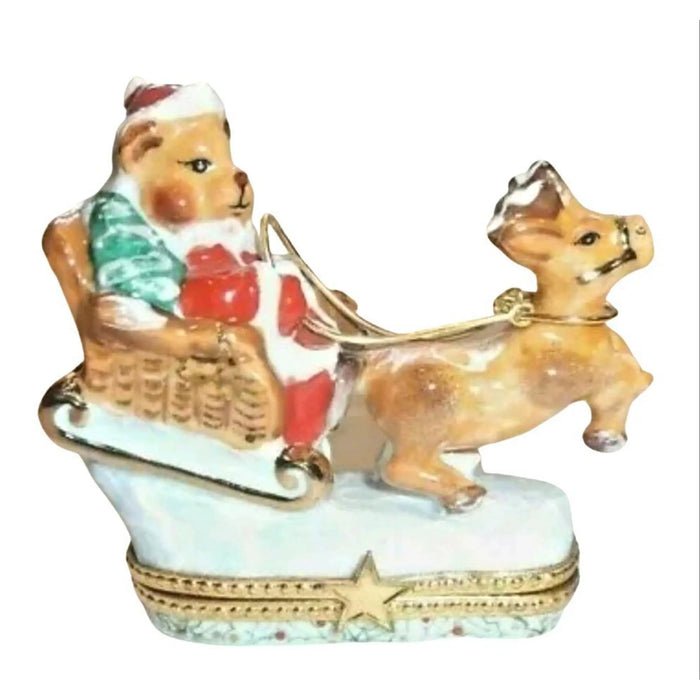
Christmas is one of the busiest seasons for Limoges boxes. Holiday Boxes covers Santa, nutcracker, ornament and tree designs, dated annual pieces and ideas for starting a family tradition.
Gift ideas
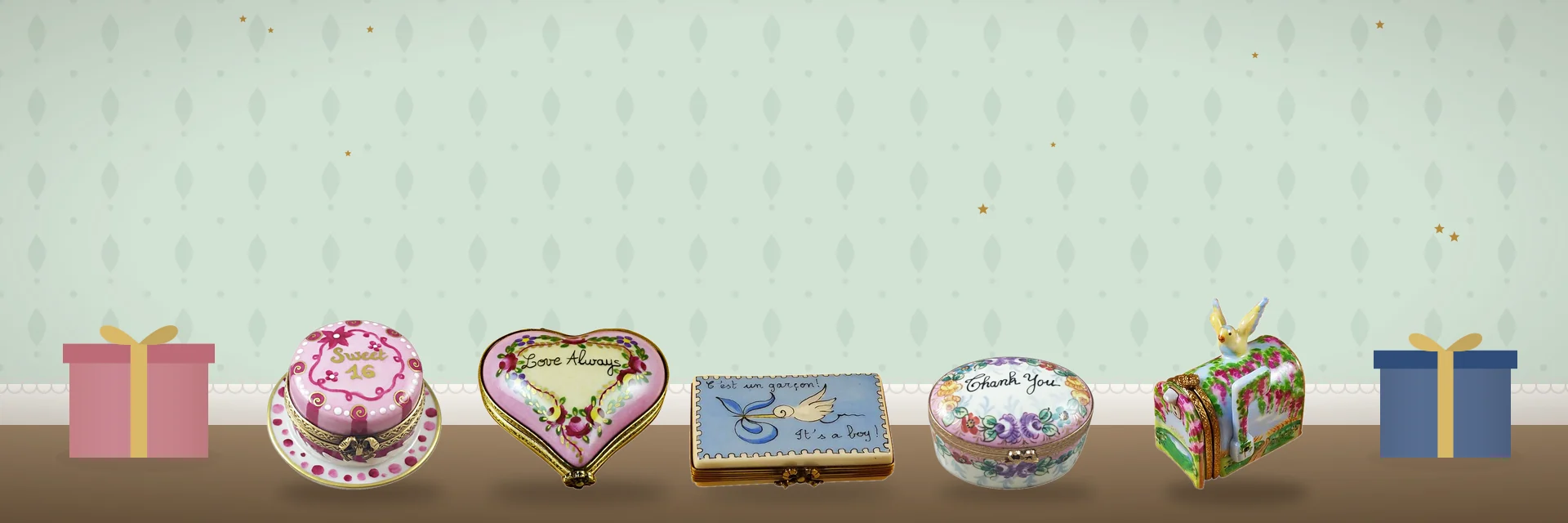
Need a box for a wedding, a new baby, a retirement or a friend who loves gardening? Gift Ideas matches themes to occasions and people, with tips on personalization and timing.
Collecting, value and care
Collecting helps you choose a theme, keep good records and buy wisely. What’s It Worth? explains what pushes a box’s value up or down and when to call an appraiser. Care & Display shows how to dust, clean and display boxes safely, and how to look after the hinge.
Visiting Limoges, and our glossary
Planning a trip? Visiting Limoges covers the city’s porcelain museum and heritage sites. If a French term trips you up, the Glossary & FAQ has short definitions. And to learn who writes this guide, see About.
A few favorites
Why people love them
Plenty of things are pretty. Limoges boxes earn their devoted following for a few specific reasons.
They are genuinely handmade. A painter may spend a long time on a single box, building up color in thin layers. Because each one is painted individually, two boxes from the same design are never quite identical. Look at the eyes on two “matching” puppy boxes and you will usually see the difference.
They are small but serious. Porcelain fired at around 1,400°C is a tough material, and a well-made box can last for generations if it isn’t dropped. That makes them practical heirlooms: easy to store, easy to display, easy to pass down.
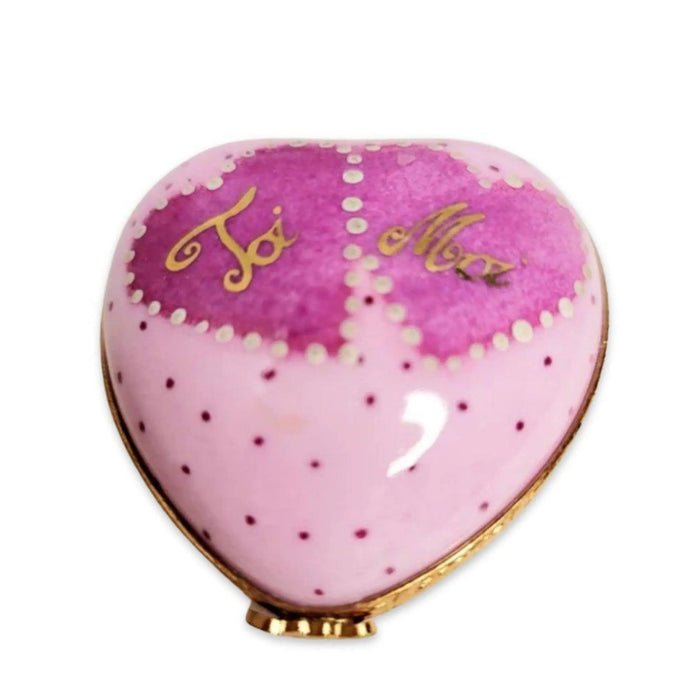
They tell a story. A box can mark a specific moment in a way a vase can’t: a tiny piano for a daughter’s first recital, a box shaped like the Eiffel Tower to remember a honeymoon, a baby carriage with the birth date painted inside the lid.
They reward a closer look. The more you know, the more you notice: the hidden surprise, the painter’s initials, a clasp shaped like a snail. Collectors enjoy that detective work as much as the boxes themselves.
Quick facts
| Fact | Detail |
|---|---|
| Material | Hard-paste porcelain (kaolin, quartz, feldspar) |
| High firing | About 1,400°C (roughly 2,550°F) |
| Where they’re made | Limoges and the surrounding Haute-Vienne department, France |
| Legal protection | “Porcelaine de Limoges” is a geographical indication (France 2017, EU 2026) |
| First hard-paste porcelain in Limoges | 1771 |
| Typical size | Around 1 to 3 inches across, small enough to hold in one hand |
| Typical base marks | “Limoges France,” “Peint Main,” a workshop or importer name, often the painter’s initials |
| Metal parts | A mount, hinge and clasp, usually brass, often gilded |
Good to know: “Limoges” on its own is not a guarantee of anything, including age. It was used by many French factories over two centuries, and the word has also been borrowed elsewhere. Our authenticity guide explains what to check next.
Something for every occasion
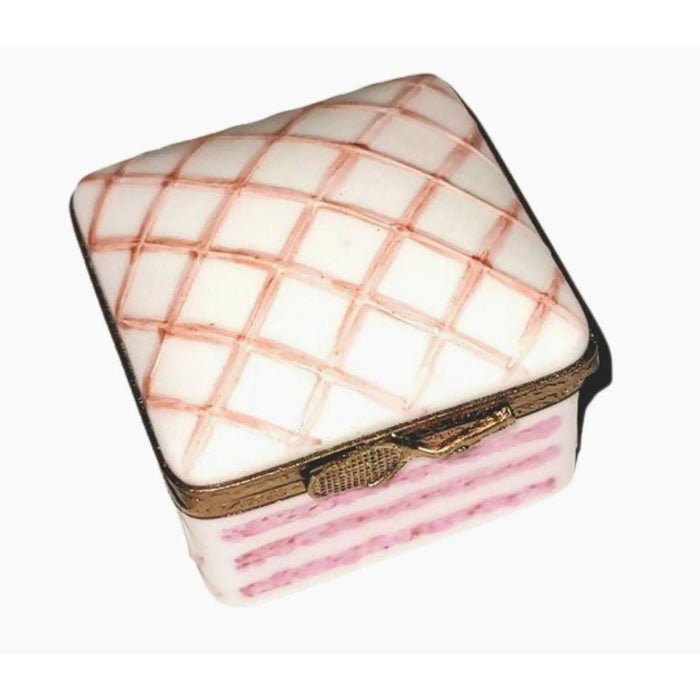
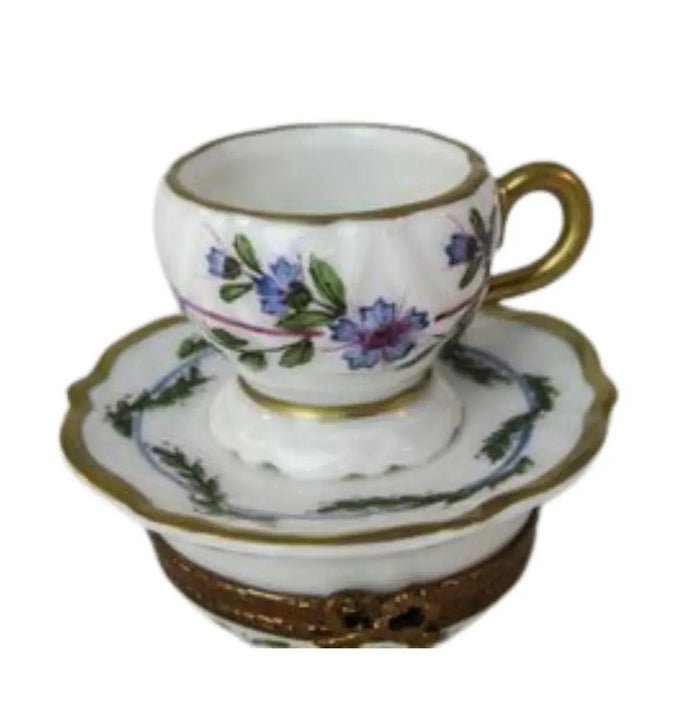
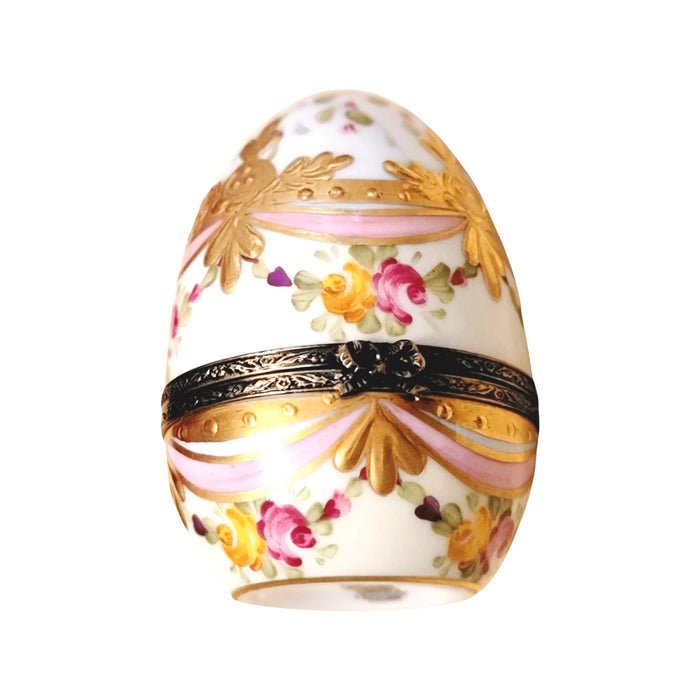
Frequently asked questions
Are all Limoges boxes made in Limoges itself?
They are made in the Limoges area. Under the geographical indication rules, porcelain sold as “Porcelaine de Limoges” must be made and decorated within the Haute-Vienne department, which includes the city of Limoges and the towns around it.
Is every Limoges box hand-painted?
Not every box on the market. A base reading “Peint Main” or “Peint à la main” signals hand painting. Other wordings indicate printed decoration with hand touches, and some older or cheaper pieces use transfers. See Reading the Marks for what each wording means.
How much does a Limoges box cost?
Prices vary widely with the workshop, complexity, size, painting detail and whether the box is new, retired or antique. As a broad guide, new hand-painted boxes from established makers usually sell for somewhere from around a hundred dollars to several hundred, with elaborate or limited pieces higher. A price far below that for a “new” box is a reason to look closely. For formal valuations, consult a certified appraiser.
Can I use my box, or is it just for display?
Most people display them, but they can hold small, dry things: rings, a pill or two, a folded note. Avoid moisture, perfume and anything sticky, and open the lid gently so you don’t strain the hinge. Our care guide has the details.
I inherited a box. Where do I start?
Turn it over and look at the base in good light. Write down every word, initial and number exactly as you see it, take a clear photo, then compare it with our marks guide. From there, our value page explains what affects worth.
If you’re ready to buy a box of your own, our team’s shop, LimogesBoutique.com, carries authentic hand-painted French Limoges boxes.
Keep reading
 Is It Real?Is your Limoges box genuine? Use our hands-on checks for marks, brushwork, hinges, porcelain and price, plus real…
 Gift IdeasLimoges box gift ideas by occasion: weddings, anniversaries, babies, birthdays, retirement, men and collectors, plus…
 CollectingHow to start and grow a Limoges box collection: choosing a theme, where to buy and how to vet sellers, mistakes to…